



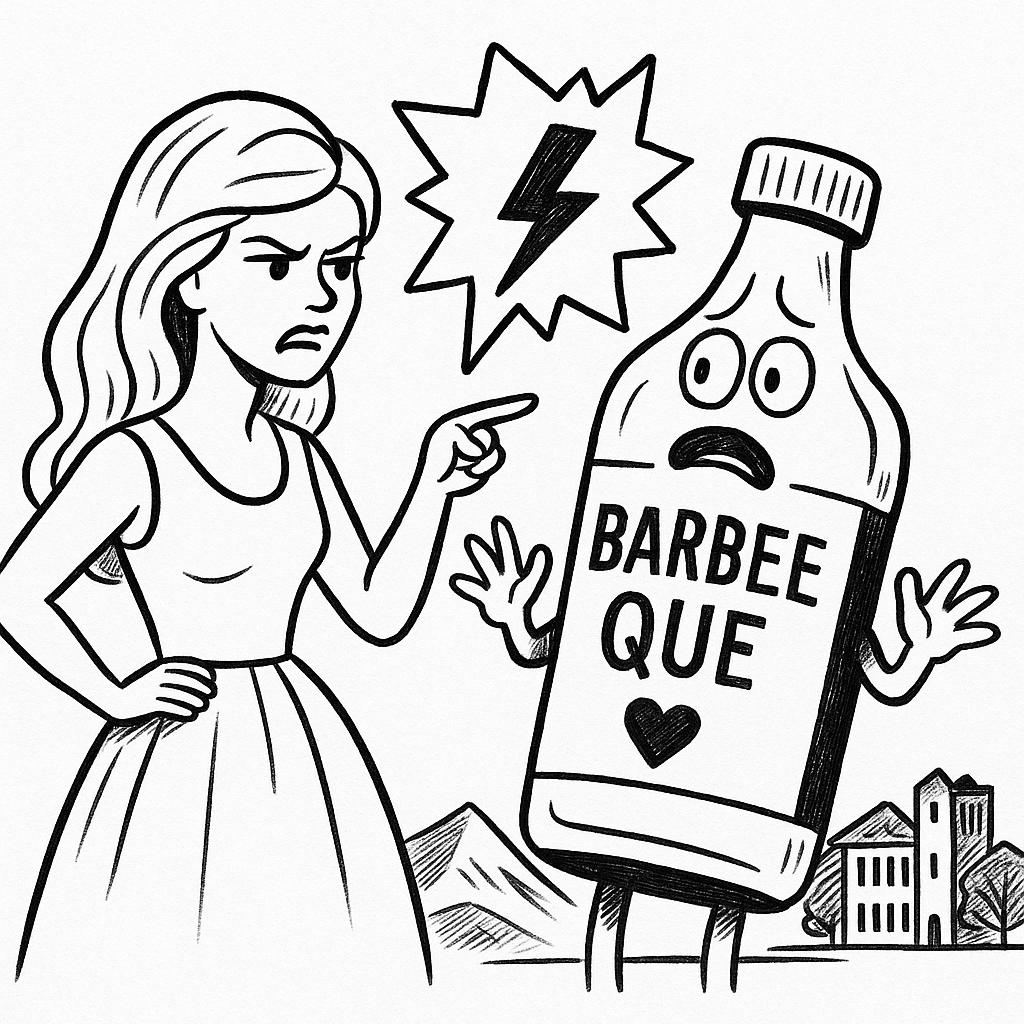
Amanda Kinsey, the owner of a restaurant specializing in grilled and barbecue dishes, called “Amanda’s BarBeeQue” in Fayetteville, faced a significant challenge when Mattel, the owner of the Barbie trademark, opposed the registration of her trademark.
After years of smooth operation, Kinsey decided to register the trademark for her business. In response, she received a 45-page objection from Mattel, which argued that the name “BarBeeQue” and the use of pink in the branding could mislead customers and suggest an association with the Barbie brand. For Amanda, the name and color have a special, personal meaning – they are a tribute to her deceased grandmother, who had her own unique approach to grilling and barbecue. The restaurant’s name and the pink color used in the visual identity are symbolic – the pink color refers to supporting breast cancer awareness, which adds a personal dimension to her brand.
The Kinsey case illustrates how challenging it can be to build an authentic brand when there is a risk of infringing on existing trademarks. For many small business owners, like Amanda, a brand is more than just a business – it’s a personal story, values, and a symbol of memories and traditions. However, even genuine intentions don’t always protect against potential legal conflicts. The conflict with Mattel highlights that entrepreneurs should consider how their branding is perceived in the broader market and whether it unintentionally resembles existing, well-known trademarks.
The choice of the name “BarBeeQue” may seem like an innocent tribute to a loved one, but Mattel’s reaction indicates the need to consider trademark protection even in the case of local, unique brands that concern products and services that are not related to each other at all. Trademark law protects consumers from potential confusion and prevents the dilution of brand identity. Mattel argues that the similarity in name and color scheme may lead customers to mistakenly associate the Kinsey brand with Barbie. This reaction shows how important it is to maintain a clear distinction between new brands and existing images on the market.
Interestingly, Kinsey’s approach, which is open to dialogue with Mattel, shows that even in difficult situations, it is possible to find a common solution. A conflict with a large corporation can be an opportunity for a small entrepreneur to better understand the principles of trademark protection and to introduce modifications that will enable the further development of the brand without the risk of infringing on the rights of others. So, how will this case end? Everything will become clear in the near future.
Amanda’s case is also a reminder that it is worth using the help of intellectual property law specialists, who can help to develop a compromise and find solutions that enable the safe development of the brand without infringing on the rights of others.
Fill out the form and we will get back to you within the next … with a preliminary quote.