



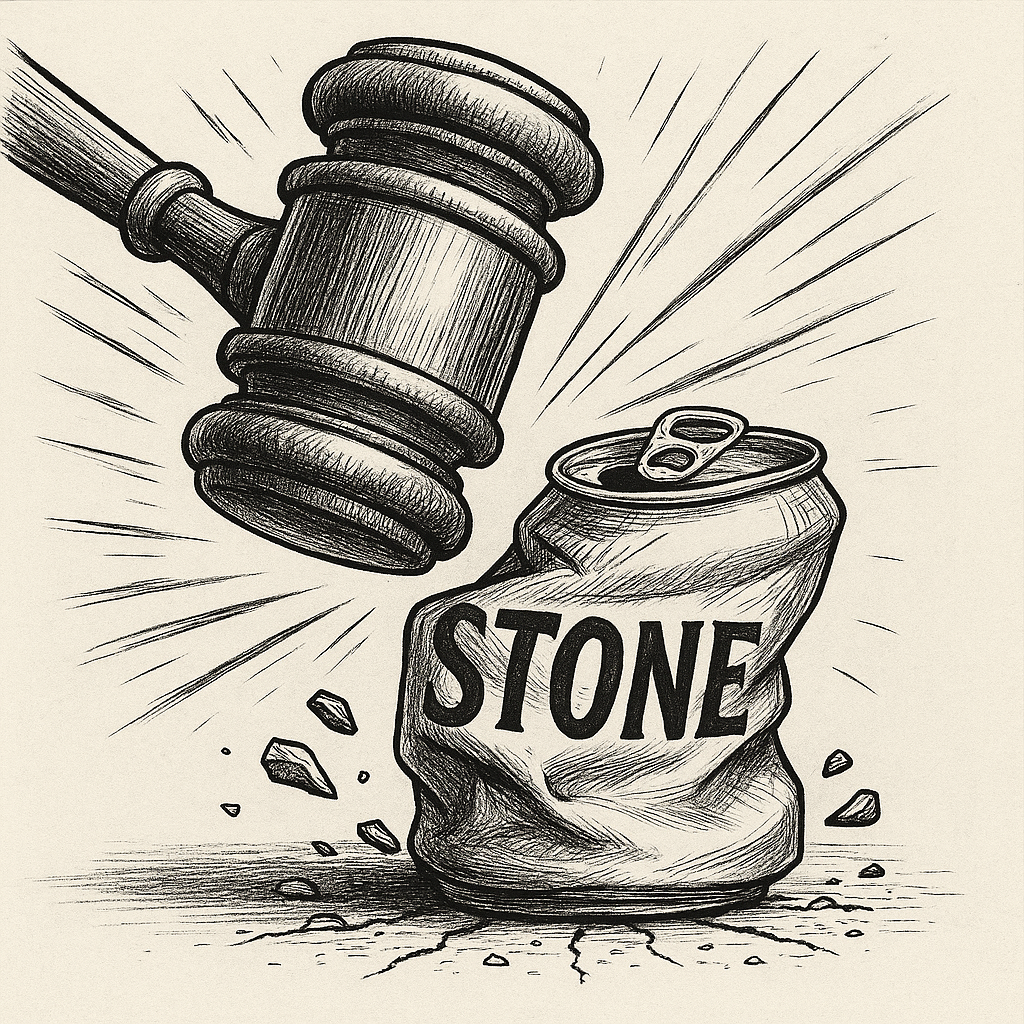
The dispute began when Molson Coors rebranded its Keystone Light brand, which Stone Brewing claimed infringed on its trademark rights. The new Keystone Light packaging featured the word “Stone,” and marketing materials used terms like “stones” to refer to individual rs. Stone Brewing argued that these actions not only violated its brand rights but also damaged its market image.
In 2022, a court in San Diego awarded Stone Brewing $56 million in damages for trademark infringement. This was one of the largest such decisions in history. After Stone Brewing was acquired by the Japanese company Sapporo Breweries for $165 million, Molson Coors decided to appeal, hoping to reduce the damages or overturn the verdict.
In December 2024, the San Jose Court of Appeal upheld the previous ruling, finding Stone Brewing’s arguments to be valid. The three-judge panel ruled that Molson Coors’ actions constituted a serious infringement of trademark rights and caused significant market damage to the smaller company. Additionally, the company must pay interest on the awarded amount. The court’s decision has broad implications for the r and other food product markets. It demonstrates that even large corporations must be held accountable for their actions towards smaller, independent brands. This ruling may also serve as a warning to companies attempting to exploit similarities in names or branding to gain a competitive advantage.
The Stone Brewing vs. Molson Coors case is an example of how important it is to protect trademarks and respect the rights of other entities in the market. Thanks to this ruling, Stone Brewing not only defended its rights but also sent a clear signal to the industry about the need to maintain fair competition.
Fill out the form and we will get back to you within the next … with a preliminary quote.