



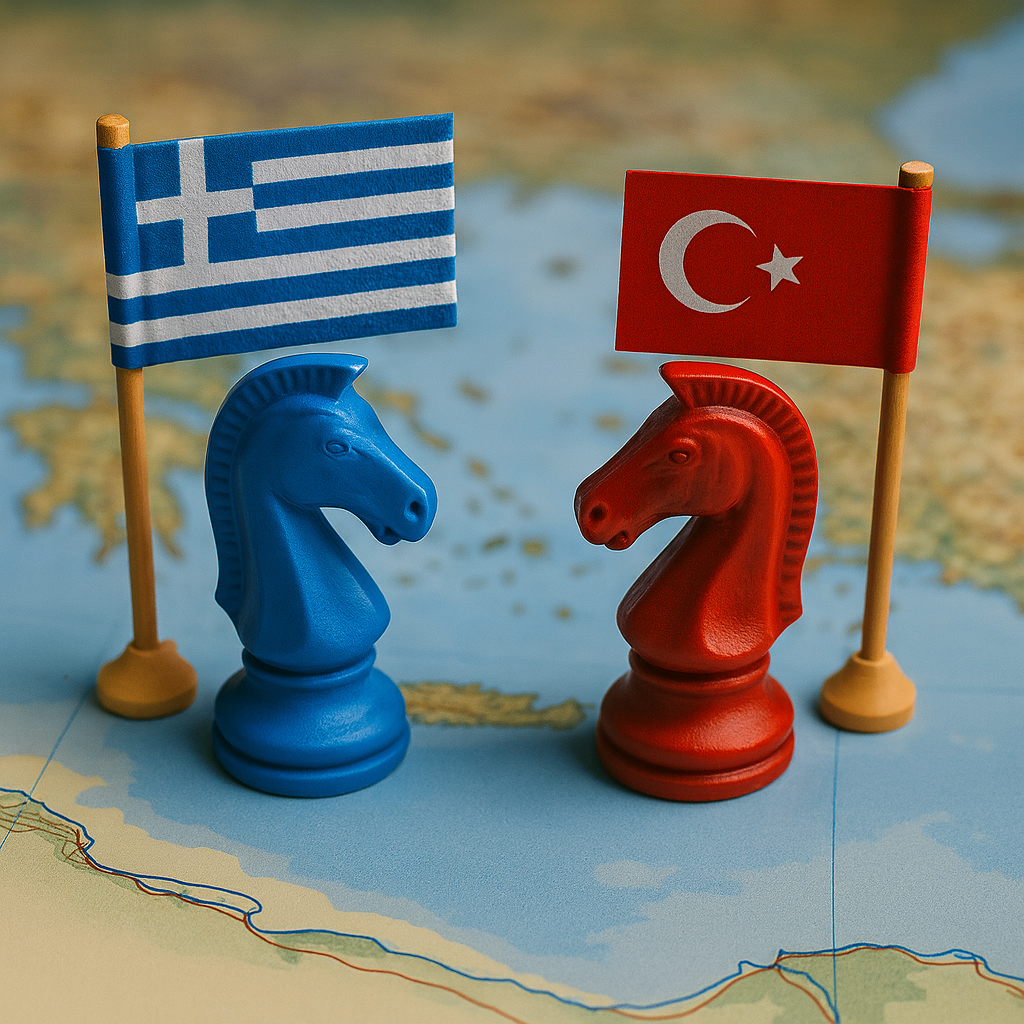
In December 2021, Turkey registered the trademark “Turkaegean” with the EUIPO, covering, among other things, the tourism and advertising sectors. Greece immediately filed an objection, arguing that the term misleads consumers by suggesting a geographical or cultural connection to the Aegean region, which is historically and legally linked to Greece. The government in Athens emphasized that most of the Aegean islands and the name “Aegean” itself are clearly of Greek origin, and that Turkey’s attempt to appropriate this name violates the country’s sovereignty. After years of proceedings, in January 2025, the EUIPO annulled the disputed trademark, finding Greece’s arguments to be valid.
The EUIPO’s decision was based on four key provisions of Regulation (EU) 2017/1001 on the European Union trademark (EUTMR). First, lack of distinctiveness (Article 7(1)(b) EUTMR) – the combination of the words “Turk” and “Aegean” was deemed too descriptive and generic to function as a trademark. Second, misleading as to the geographical origin (Article 7(1)(g) EUTMR) – the court found that the term suggested a non-existent link between Turkey and the Aegean region. The third argument was bad faith registration (Article 59(1)(b) EUTMR) – the EUIPO noted that Turkey sought to appropriate a name with symbolic meaning, rather than build a commercial brand. Finally, protection of public policy (Article 7(1)(f) EUTMR) – the court took into account the geopolitical implications of the dispute, emphasizing that trademarks cannot exacerbate international tensions.
The ruling in the “Turkaegean” case sets an important precedent that reinforces the three pillars of EU intellectual property law. First, it confirms that EUIPO will rigorously assess trademarks that use geographical names, especially when they relate to areas with a complex history. Second, it establishes boundaries for the principle of “bad faith” – registering trademarks for political or geopolitical purposes will be considered an abuse. Third, the decision strengthens consumer protection against misinformation by making it more difficult for companies to build brands based on false associations. Experts point out that the ruling may influence other disputes, such as those concerning the names of border regions or places of cultural significance to many nations.
The invalidation of “Turkaegean” sends a signal to businesses and states to be more cautious when registering trademarks related to geography or heritage. EUIPO will require evidence of an authentic connection between the trademark and the region in question, as well as an analysis of potential political consequences. Companies planning to use names with historical baggage should conduct due diligence, considering not only intellectual property law but also the international context. At the same time, the ruling encourages member states to actively challenge trademarks that – even indirectly – undermine their sovereignty or identity.
The dispute over “Turkaegean” shows that EU intellectual property law is evolving towards greater sensitivity to geopolitical and cultural context. The EUIPO’s 2025 decision not only protects Greece’s interests but also strengthens mechanisms to prevent the instrumentalization of trademarks for purposes beyond purely commercial ones. For businesses, it is a clear message: when registering trademarks, they should consider not only their market potential but also the broader social and political consequences.
Fill out the form and we will get back to you within the next … with a preliminary quote.