



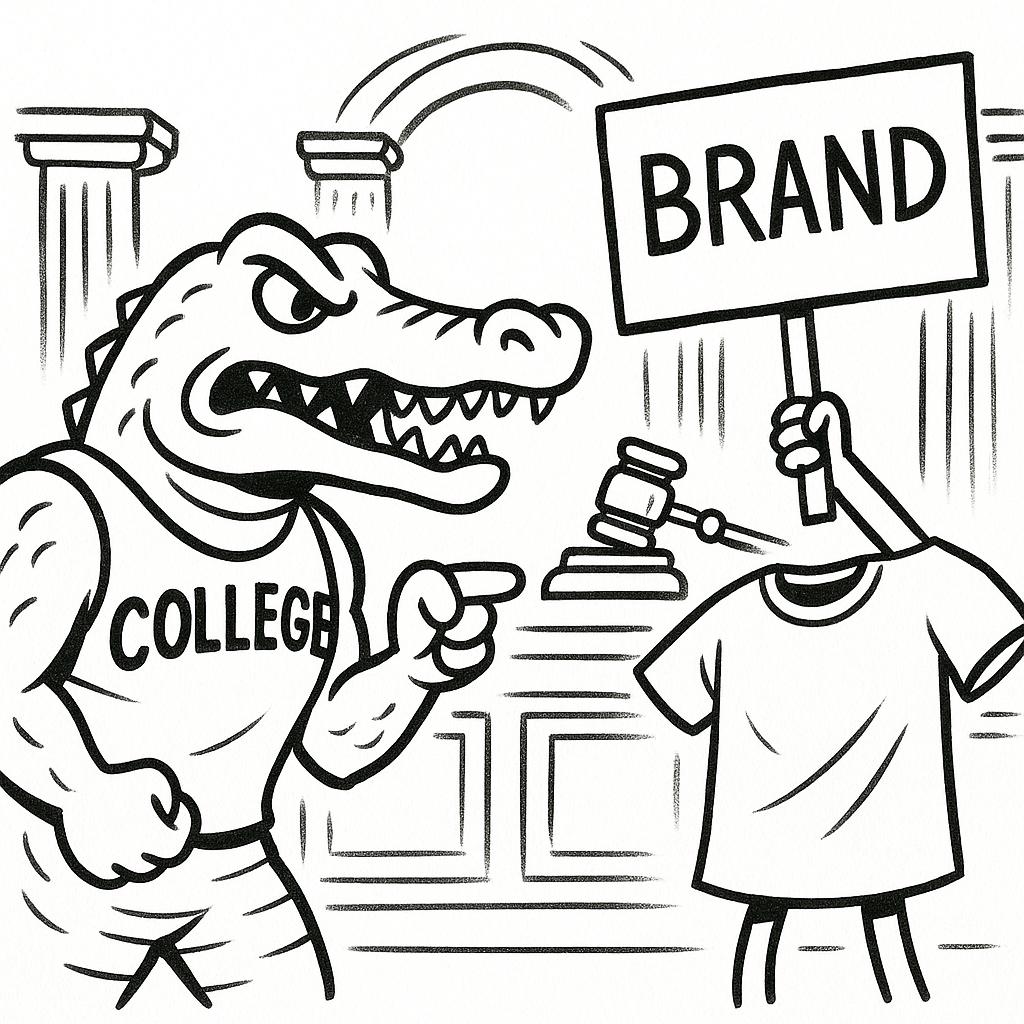
The dispute began in November 2024, when Lynnea Bamberg filed an application with the USPTO to register the trademark “Gator Done.” The trademark was intended to cover a broad range of clothing and accessories, which initially did not seem controversial. However, shortly thereafter, on September 26, 2025, the University Athletic Association filed a formal opposition to this registration. The UAA argued that the registration of “Gator Done” could mislead consumers into believing that it was affiliated with the official Florida Gators brand. It pointed to the risk of “likelihood of confusion” – a situation in which consumers would believe that Lynnea Bamberg’s products were authorized by or affiliated with the University of Florida. Although many brands in the U.S. legal system share similar words or motifs, the “Gator Done” case is unique. The word “Gator” is strongly rooted in the sporting identity of the University of Florida – it is not only the team’s nickname but also part of the culture and recognizable branding. Therefore, any commercial use of this element may raise controversy.
A key element of the case turned out to be a section of the UAA documentation, in which the organization claims that before filing the trademark application, Lynnea Bamberg had requested a license to use the mark, but was denied. In the opposition filing, the UAA clearly emphasized that: “Prior to the date of filing the application, the Applicant contacted the Opponent requesting a license to use its mark, but the Opponent refused and did not authorize the Applicant to use or register any of the marks belonging to the Opponent.” If these claims prove to be true, the situation is clear – the filing of the “Gator Done” trademark application may have n an attempt to circumvent the licensing system. In such a case, the matter would likely be referred to the Trademark Trial and Appeal Board (TTAB), which oversees this type of dispute. For the UAA, this is not just about one dispute – it is a fight to maintain exclusive control over the commercial use of the Florida Gators brand and to prevent any instance that could weaken its recognition or reputation.
Not every instance of using the word "Gator" automatically constitutes trademark infringement. In colloquial language, particularly in the southern states of the US, the term has a broader meaning, and many businesses, restaurants, or brands use it as an element of local identity. On the other hand, context is crucial. If the products offered under the "Gator Done" brand are similar to those sold or licensed by the University of Florida – for example, sportswear, hats, or hoodies – then the risk of confusion becomes real. Cases of this type often teeter on the edge of interpretation: is a particular entrepreneur inspired by a local motif, or is he deliberately trying to exploit the reputation of a well-known brand? These are the questions that the TTAB will have to decide if Bamberg decides to defend its application.
After the UAA filed an opposition, all documentation was provided to the applicant, who – in accordance with USPTO procedure – has until November 25, 2025, to respond. Failure to respond within the specified timeframe will result in abandonment of the mark, and consequently, the loss of any rights to “Gator Done.” If Bamberg decides to continue with the proceedings, the case will proceed to a full process before the TTAB, which may take several months. In the meantime, the University of Florida will continue to protect its rights through the Collegiate Licensing Company – the entity responsible for licensing marks related to university teams. This case is not only a local dispute over an apparel slogan but also a reminder of the importance of proactive brand management in the academic and sports sectors. For universities that generate millions in revenue from merchandising, losing control of a trademark can have serious financial and reputational consequences.
Fill out the form and we will get back to you within the next … with a preliminary quote.