



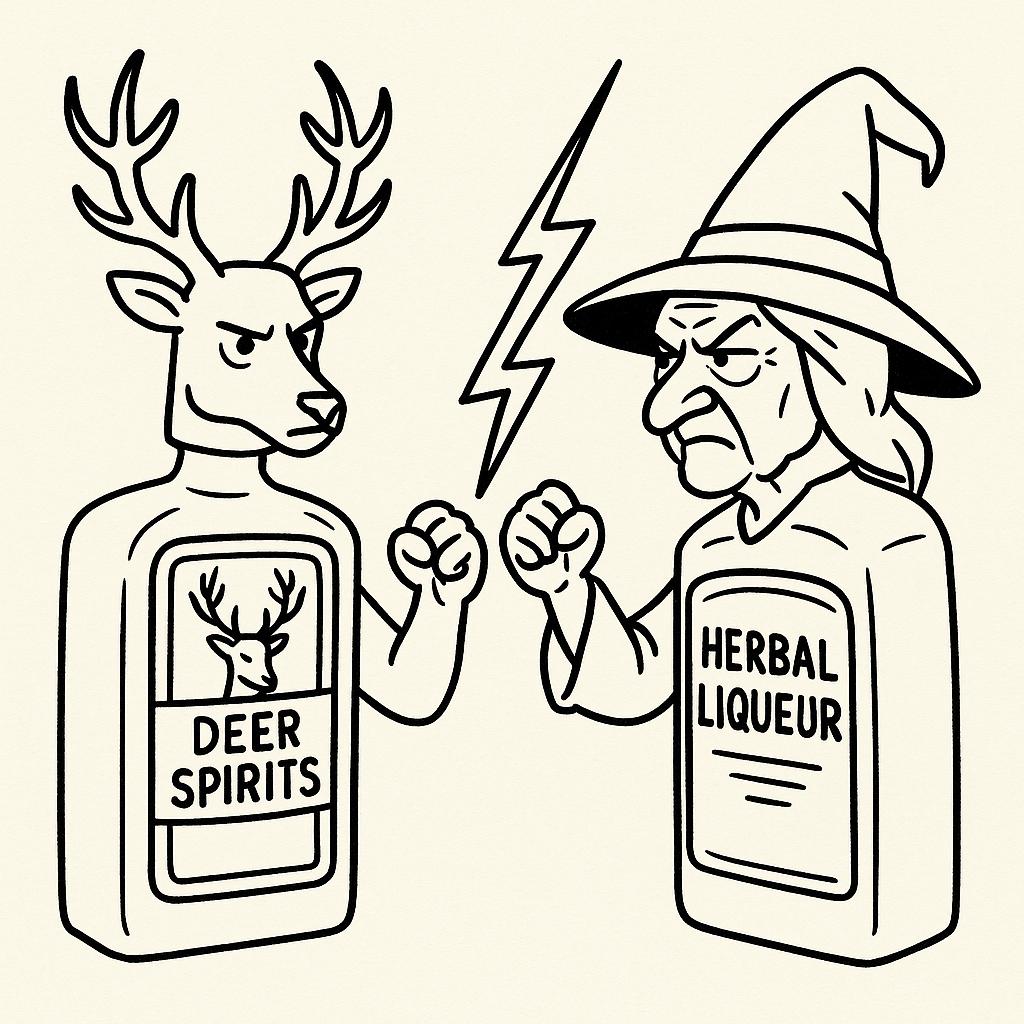
The dispute began when an application for the trademark "Alten Kräuterfrau" (which can be translated as "Old Herbalist") was filed with the European Union Intellectual Property Office (EUIPO). The trademark was intended to be used for – of course – alcoholic beverages. Mast-Jägermeister SE immediately filed an opposition. Interestingly, the body in question (the Opposition Division of the EUIPO) initially ruled in 2021 that the trademarks were not similar enough to mislead consumers, meaning that there was no "likelihood of confusion." The opposition was rejected, but for Jägermeister, it was only the first round.
The German manufacturer appealed, but changed its strategy. Instead of focusing solely on whether someone might confuse the two products on the shelf, Jägermeister emphasized Article 8(5) of the EU trademark regulation. This is the provision that protects well-known trademarks. It states that even if there is no risk of confusion, registration may be refused if the use of the new trademark would bring "undue advantage" from the distinctive character or reputation of the earlier trademark, "without justifiable reason." In other words, Jägermeister argued that "Alten Kräuterfrau" was trying to "piggyback" on their hard-earned reputation. To prove this, the company presented evidence of its market position, including rankings showing that it is one of the top 100 premium spirits brands in the world, and that in Germany alone, it had a 38% market share in the "Bitters" category in 2019.
The EUIPO Board of Appeal reviewed the case again in 2022 and ordered a re-examination of the matter regarding the infringement of reputation. Finally, in 2025, after a second review, both the Opposition Division and (in September 2025) the Board of Appeal ruled in favor of the Jägermeister manufacturer. The authorities found that, although the marks differ in their verbal elements (Jägermeister means "Master Hunter," and "Alten Kräuterfrau" means "Old Herbalist"), there is sufficient similarity between them for consumers to associate them. What was the basis for this similarity? First and foremost, it was the overall layout of the label, the use of a similar Gothic font in the main verbal elements, and the similar color scheme. Furthermore, the Board found that there was a "distant conceptual similarity" between them, as both marks (in one way or another) refer to the theme of hunting.
The Board of Appeal confirmed that the Jägermeister trademark enjoys an exceptionally strong reputation. It found that the degree of similarity (although slight) was sufficient for the public to associate the new mark with the well-known brand. This association would allow "Alten Kräuterfrau" to unfairly benefit from the appeal and value of the Jägermeister brand, which it had built over decades through costly marketing efforts. The applicant tried to defend itself, arguing that its label simply reflected the "traditional appearance of a German bitter." However, this argument was rejected. Jägermeister proved that it was largely responsible for shaping what is now perceived as "traditional style" through its long-standing presence and dominance in the market. In short, the competitor tried to "free-ride" on Jägermeister's reputation, but the application for the registration of the "Alten Kräuterfrau" trademark was ultimately rejected.
Fill out the form and we will get back to you within the next … with a preliminary quote.