



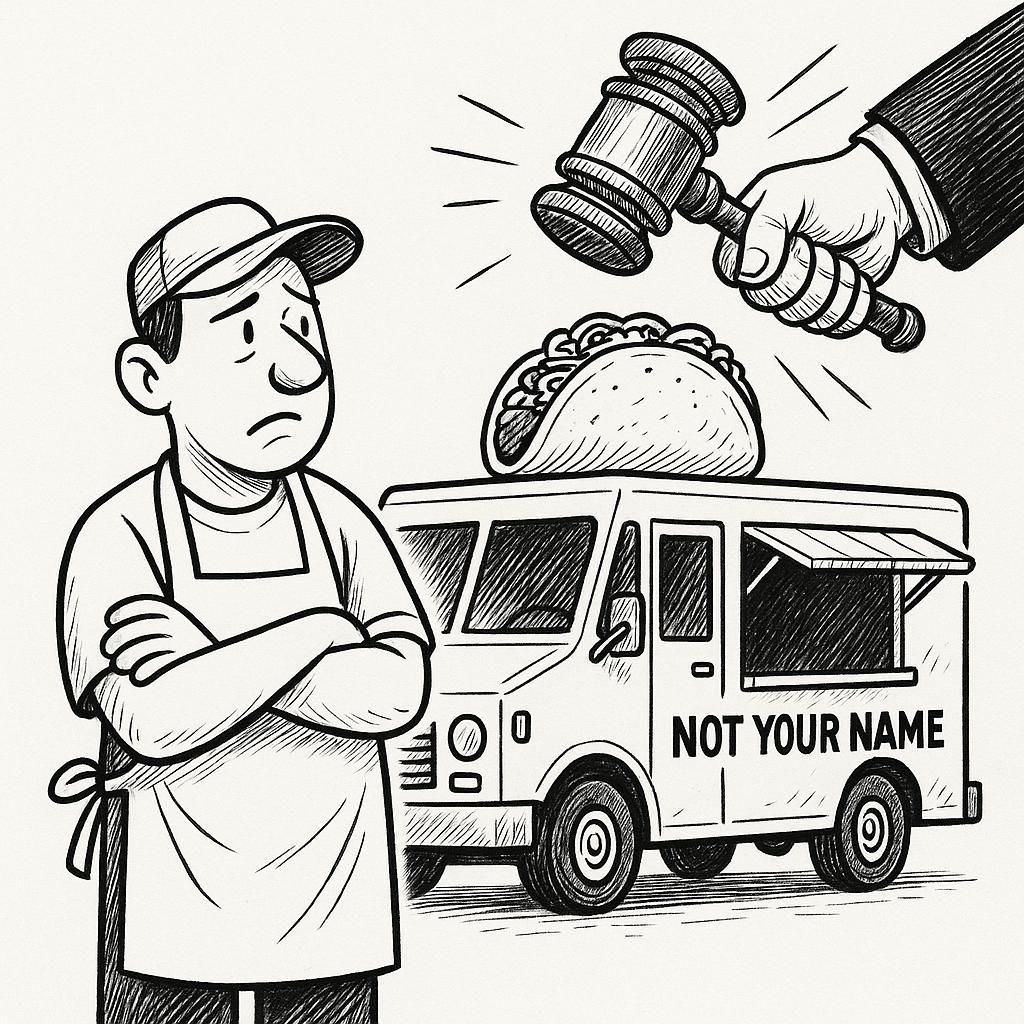
The protagonist of this story is the owner of the “Flaco’s Tacos” food truck (the similarity to the title “Nacho Name” – a playful take on “Not Your Name” – in the media is no coincidence). The name seemed perfect: short, catchy, and referencing a popular nickname in Latin culture (“Flaco” means “Skinny”). The owner, Rafael Calvillo, invested in painting the truck, creating a menu, building a website, and establishing relationships with the local community. The business was thriving, and customers associated the name with good food. Unfortunately, the entrepreneur missed one crucial step: he didn’t check whether someone else had already come up with the idea. It turned out that the name “Flaco’s Tacos” was already a registered trademark belonging to another company. The trademark owner, protecting their interests, sent a warning letter, and the matter quickly escalated, leading to a lawsuit and the need to immediately change the name.
Many people are outraged by such situations, seeing them as examples of greedy corporations destroying small businesses. However, intellectual property law is blind to the size of the enterprise. Trademark infringement does not require malicious intent. You don't have to intend to steal someone's brand. It is enough that you use a name that is deceptively similar to one that has already n registered for similar services (in this case, the food industry). For the court, it doesn't matter that "Flaco" is a popular nickname. If someone has obtained exclusive rights to it in a particular industry, they have the right to demand that others stop using it. The goal is to protect consumers from confusion – a customer buying tacos from a food truck should not have to wonder whether it is the same chain they saw in another city or just a coincidental similarity in names.
The consequences for the food truck owner are painful. They must not only change the name (which involves the costs of repainting the truck, new flyers, and a website), but they also lose the recognition they have built up over months. In the case described by the media, the local community came to the rescue, sending in suggestions for new names, but the stress and legal costs remain a real burden. This is a classic example of a situation where a few hundred dollars saved at the beginning of the business (by not checking trademark databases) comes back to haunt them with thousands of dollars in losses later on. Often, all it would take is to enter the name in the patent office's search engine or have a lawyer do it to find out that our brilliant idea is already taken.
There’s no such thing as a company that’s “too small” to violate the law. In the age of the internet and social media, even a local food truck has global visibility. Trademark owners use automated tools to monitor the web and detect infringements. If you’re planning a business, remember: a name is your asset, but only if you build it on a solid foundation. Using common phrases, pseudonyms, or puns is risky because the chance that someone has done it before you is high. Checking the availability of a name should be as natural as checking the technical condition of a van before hitting the road.
Fill out the form and we will get back to you within the next … with a preliminary quote.