



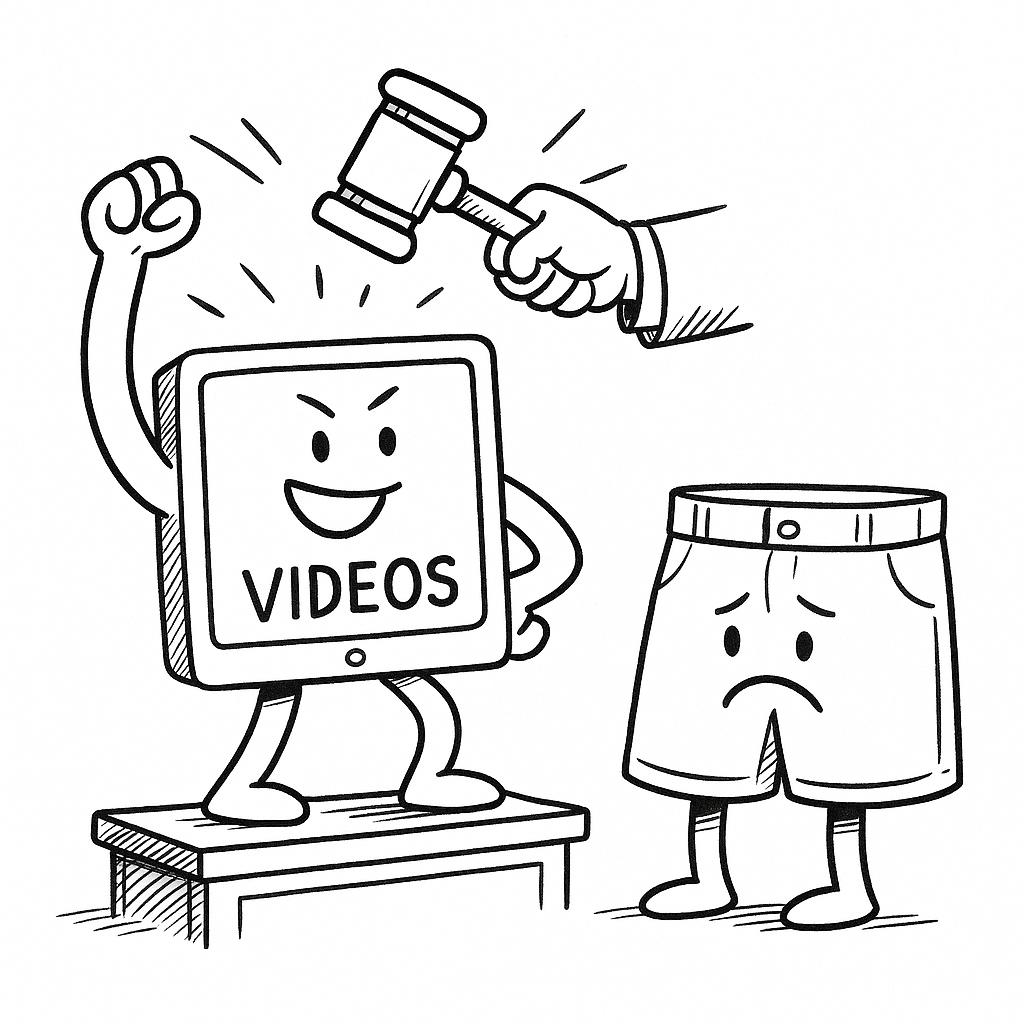
Shorts International, the owner of a television channel dedicated to short films, accused Google of trademark infringement when YouTube launched its Shorts platform in 2020, dedicated to short, one-minute videos. This was in response to the growing popularity of TikTok.
Importantly, the case ultimately went to court, where Google was sued for infringing on the protective rights to the trademark by using the aforementioned word, which was alleged to mislead consumers. In connection with the lawsuit, the plaintiff also demanded compensation for the infringement of its rights.
Google’s lawyer argued that the YouTube Shorts platform is clearly associated with YouTube and cannot mislead consumers about its origin. Thus, the American giant took on the challenge in the dispute with Shorts International.
The case went to court in London. Judge Michael Tappin, who ruled on the case, emphasized that there is no risk of confusion here, as the mere use of the word “shorts” by Google does not suggest that the platform is affiliated with Shorts International.
Furthermore, there is no damage to the brand, as Google’s actions do not infringe on the character or reputation of the trademarks owned by the plaintiff company. Importantly, no evidence was presented during the proceedings to show that consumers actually had trouble distinguishing between the two brands.
As a result, on October 31, 2024, the court issued a ruling dismissing the lawsuit filed by the British company Shorts International against Google regarding the alleged trademark infringement by the YouTube Shorts platform. Furthermore, the court also emphasized that common terms, such as “shorts,” cannot be easily monopolized in industries that naturally use such terms.
The London court’s decision is an important precedent that could have far-reaching consequences for technology and media companies. It shows that while trademarks are an important tool for protecting a brand, their scope has its limits. In the case of generic terms, such as “shorts,” trademark owners must accept limitations in their enforcement, especially when there is no evidence of actual consumer confusion.
Google’s victory is proof that even in complex legal disputes, common sense can prevail over legal technicalities. The court confirmed that the YouTube Shorts platform, despite using the common term “shorts,” does not infringe on the rights of another company. For Google, this is not only a legal victory but also a signal that innovation and product development can be pursued without the risk of excessive restrictions from trademark owners.
Fill out the form and we will get back to you within the next … with a preliminary quote.