



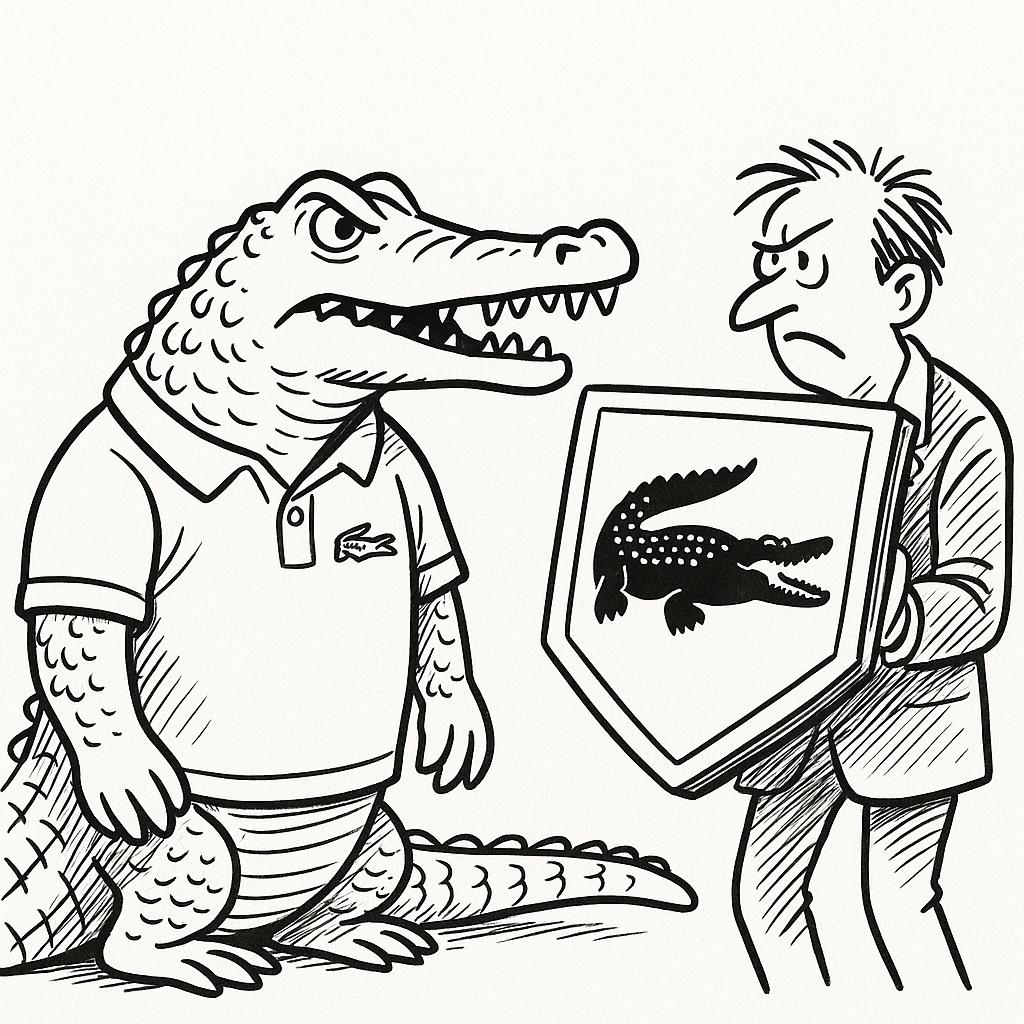
Lacoste first used and registered its crocodile logo in France in 1927, and subsequently obtained trademark protection in India, with the earliest registrations dating back to January 1983. The brand eventually began using the crocodile graphic mark in India from 1993. CIPL, on the other hand, held trademark rights for the word mark “Crocodile” and the corresponding crocodile graphic from June 1952, and had n using it in India on similar products, namely clothing and footwear, since 1990.
Over time, Lacoste discovered that CIPL had n using a similar crocodile image without the accompanying “Crocodile” name, allegedly since at least 1997. The French company considered this a violation of its trademark and an act of misleading consumers, arguing that CIPL had no right to use the crocodile image independently without the brand name. Despite formal attempts to resolve the dispute between 1999 and 2001, CIPL refused, citing a Co-Existence Agreement (CEA) from 1983, which they claimed allowed for such use. However, Lacoste argued that this agreement did not cover the territory of India, and CIPL had no right to use the crocodile logo without the brand name. As a result, Lacoste sought a permanent injunction against CIPL’s use of the trademark and the disclosure of profits earned in India.
After many years of dispute and the French brand’s lack of success in this area, a breakthrough finally occurred. The case eventually reached the Supreme Court of Delhi, where, in August 2024, after a thorough examination, a ruling was made in favor of Lacoste.
The court issued a permanent injunction against CIPL, preventing them from further using the disputed trademark, and also ordered CIPL to account for the profits obtained from the sale of goods bearing the infringing trademark from August 1998 until the date of its cessation.
The court assessed the similarity of the trademarks, the likelihood of consumer confusion, and the observance of exclusive rights (copyright) and indicated that there is a high degree of visual and conceptual similarity between the Lacoste and CIPL trademarks, with the differences being too minor to prevent consumer confusion. The court found that the trademarks were deceptively similar. Furthermore, the court noted that CIPL’s earlier use included only the composite mark (the word “Crocodile” and the image), and not the crocodile image alone, which they later began to use. Regarding the Co-Existence Agreement (CEA) of 1983, it was confirmed that its scope was limited, and its content did not include the territory of India. In terms of copyright protection, the court found that the similarities stemmed from the general concept of a crocodile, and not from copying, and rejected Lacoste’s claim of copyright infringement.
The Delhi High Court’s ruling emphasizes the need for clear establishment of reputation in trademark cases, especially in the context of cross-border disputes. This case serves as a cautionary tale that territorial limitations and agreements must be carefully considered in the future to ensure effective enforcement of trademark and copyright protection.
Fill out the form and we will get back to you within the next … with a preliminary quote.