



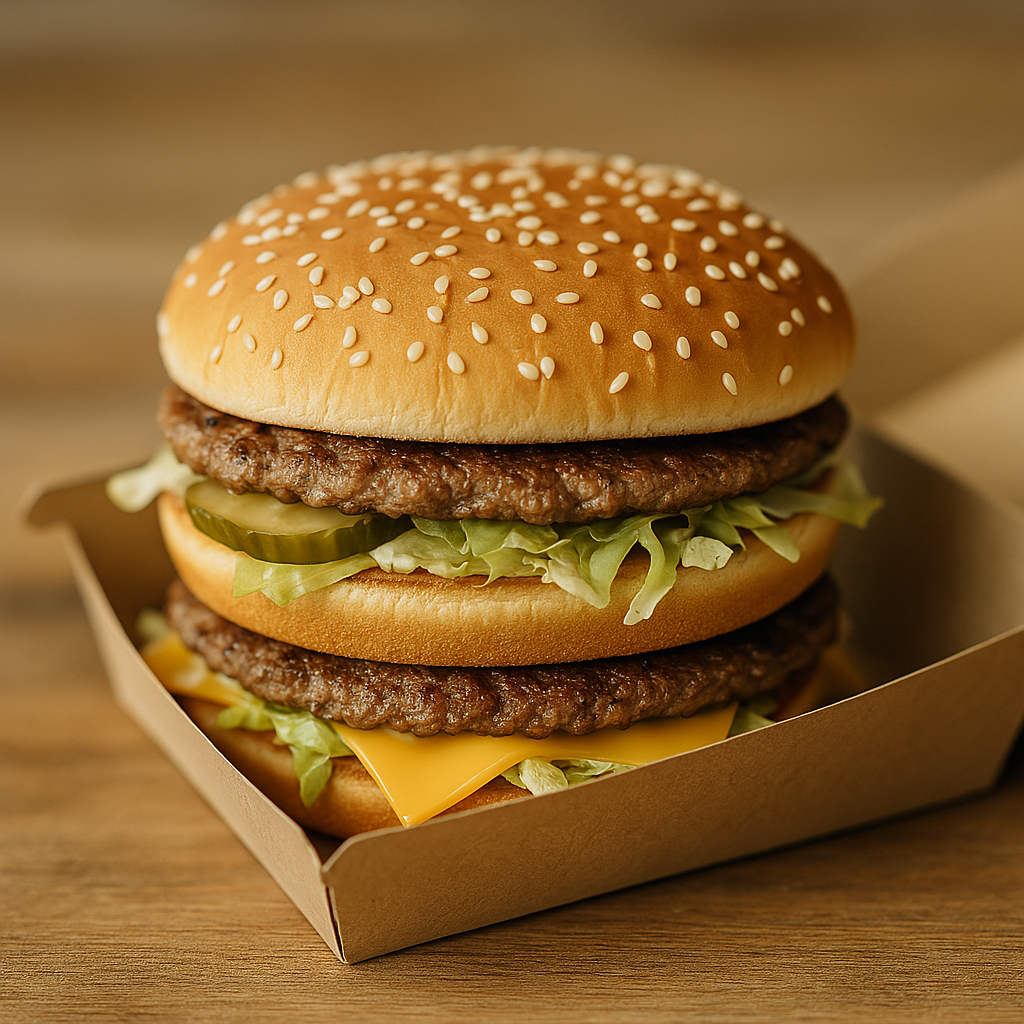
Supermac’s, an Irish fast-food chain known for serving burgers and fish and chips, has n engaged in a legal dispute with the global giant McDonald’s for years. The conflict concerns the “Big Mac” trademark, which was registered back in 1996. According to the Irish brand, McDonald’s’ monopoly on the name “Big Mac” is a form of “trademark bullying” that hinders the development of many smaller companies in Europe. As a result, in 2017, Supermac’s filed an application to invalidate the “Big Mac” trademark in relation to certain goods and services within the European Union. The justification stated that McDonald’s had used its trademark in a monopolistic manner, limiting competition in the fast-food industry, including for products and services that have little to do with the popular burger. Therefore, the disputed mark has not n used correctly in the European Union for the past five years. In response, McDonald’s provided relevant evidence in its defense, including documentation such as menus, packaging, and websites, to prove the use of the trademark.
In 2019, the European Union Intellectual Property Office (EUIPO) partially granted Supermac’s request, but emphasized that the protective right for the “Big Mac” trademark remains valid for meat products, including poultry, and services related to restaurants, takeaway meals, and drive-in facilities.
As one might expect, McDonald’s appealed the decision, and the case ultimately ended up in the Court of the European Union.
In its latest ruling of June 5, 2024, the Court of the European Union (case no. T-58/23) partially annulled the decision of the EUIPO, further restricting the protection of the “Big Mac” trademark. The Court found that McDonald’s had not provided sufficient evidence of the actual use of the trademark in relation to “poultry products,” “chicken sandwiches,” as well as services related to restaurants and drive-in facilities. According to the Court, the evidence presented by McDonald’s did not demonstrate the significance of the use of the trademark in terms of the period of use, the volume of sales, or the frequency. The court assessed the evidence regarding the operation of restaurants or similar establishments, as well as drive-in facilities, in a similar vein.
As a result, McDonald’s lost the right to the “Big Mac” trademark in the European Union in relation to poultry products, such as chicken nuggets and chicken sandwiches.
Following the court ruling, McDonald’s issued a statement assuring that the decision of the EU Court does not change its approach or its right to use the “Big Mac” trademark. According to the fast-food giant, regardless of the circumstances, the iconic Big Mac is still beloved by customers across Europe.
Fill out the form and we will get back to you within the next … with a preliminary quote.