



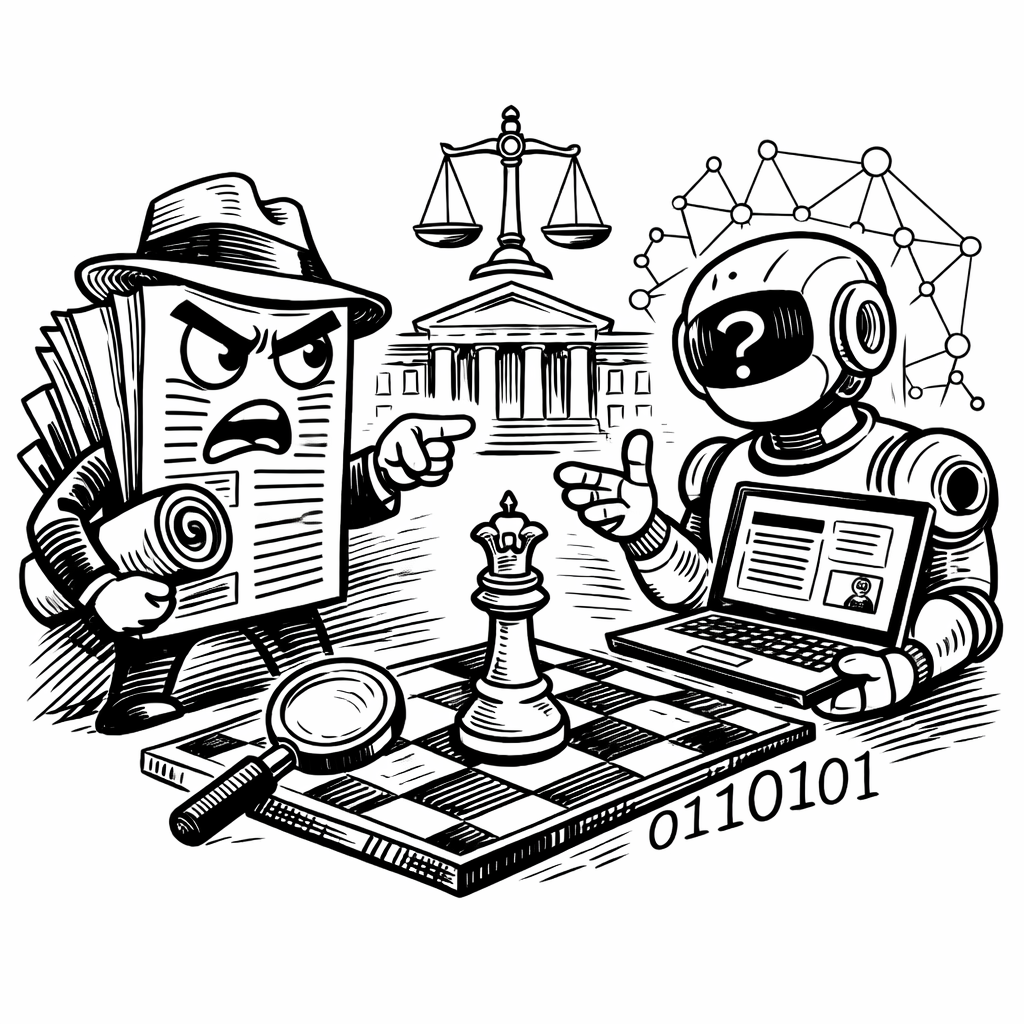
The lawsuit was filed in the United States District Court for the Southern District of New York and describes Perplexity AI’s actions as the unlawful copying, distribution, and display of millions of New York Times articles without consent or license, which was intended to train and operate its AI tools. In this context, the publisher argues that Perplexity’s algorithms not only reproduced copyrighted content but also generated it in a way that could resemble original NYT material and was presented to users alongside its trademark, which, according to NYT, constitutes false designation of origin and potential confusion as to the source of information.
Furthermore, the lawsuit states that Perplexity not only ignored warnings and requests to stop using NYT content but also created inaccurate or fabricated responses (so-called “hallucinations”), which gained credibility precisely because of their association with the recognizable The New York Times trademark. Such a combination of content and trademark, according to the plaintiff, damages the brand’s reputation and may mislead users into believing that the presented responses are approved or sponsored by the newspaper.
Although the main focus of the case is copyright infringement, a significant portion of the lawsuit concerns actions that infringe on The New York Times’ trademark rights under the U.S. Lanham Act. In legal practice, this refers to situations where the use of a trademark or the presentation of content may suggest to consumers that an AI product or service is officially affiliated with The New York Times, which – if confirmed in court – may result in injunctions against the use of the trademark, damages, and other remedies.
It is worth noting that such claims go beyond classic disputes over copyright infringement, as they demonstrate how trademark protection can function in the new context of digital services and generative AI, which, under the law, often do not fit into the traditional framework of “goods” or “services” offered to consumers.
The New York Times versus Perplexity AI case is not an isolated incident. In recent weeks, similar lawsuits against the same startup have n filed by, among others, the Chicago Tribune and other media outlets, accusing the company of unauthorized use and reproduction of content in AI-generated responses, often in a way that closely resembles the original text or audiovisual materials. All of this is part of a growing conflict between traditional publishers and technology companies over who can use intellectual property and under what conditions in the context of generative artificial intelligence. Publishers are increasingly arguing that without appropriate licenses and safeguards, such models not only infringe copyright but also damage the reputation and credibility of their brands.
From the perspective of intellectual property law practice, this dispute demonstrates that trademark protection is no longer limited to traditional tangible products and services, but extends to the realm of digital services and contexts that, until recently, were not the subject of such disputes. The rulings in this case may have far-reaching consequences for brand protection strategies, especially for entities that need to monitor the use of their trademarks also in AI environments and content generation tools.
Fill out the form and we will get back to you within the next … with a preliminary quote.