



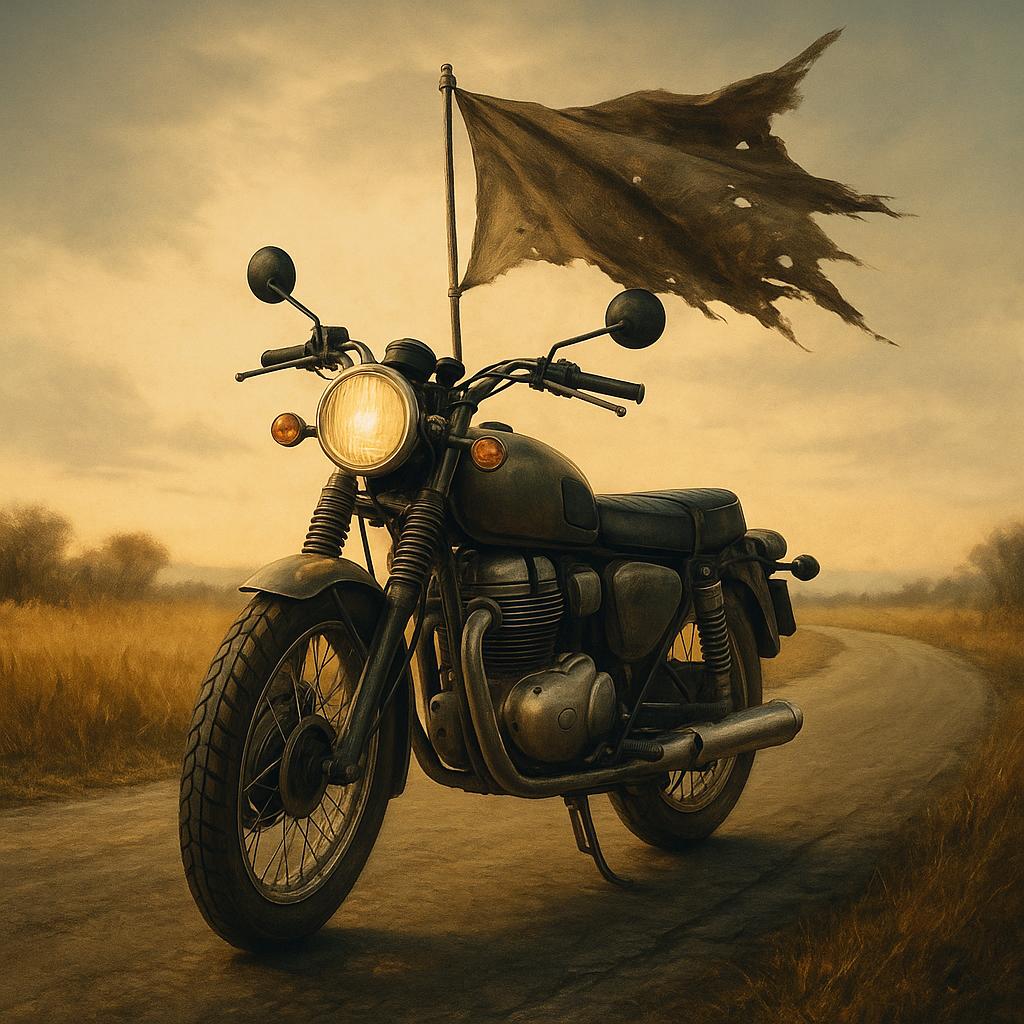
Ideal Jawa, the original manufacturer of Yezdi motorcycles, was placed in liquidation back in the 1990s. For years, the liquidation process was managed by a government official (the so-called Official Liquidator), whose task was to pay off creditors from the assets of the bankrupt company. Theoretically, these assets also included trademarks.
The problem is that for over 15 years, the liquidator did nothing to protect the Yezdi brand. He did not renew the registration, did not use it, and did not license it. The trademark was neglected. In the meantime, Boman Irani (son of one of the founders of Ideal Jawa) and the company Classic Legends (supported by the Mahindra Group) decided to revive the legend. They re-registered the trademark and started production.
As the new Yezdi motorcycles began to gain traction, the liquidator of Ideal Jawa and the association of workers from the defunct factory suddenly remembered the brand. They approached the court, arguing that the trademark still belonged to the bankruptcy estate and should be auctioned off to pay off old debts. In the first instance, the court ruled in their favor, blocking Classic Legends from using the name. However, in November 2025, the appellate court (Division Bench) overturned this ruling. The judges asked a key question: can one have the right to a trademark that has n abandoned? The court found that the liquidator had neglected the brand for years, allowing it to lapse. According to the law, an abandoned trademark becomes public domain and can be taken over by anyone who starts using it in good faith.
The court emphasized that a brand is not a perpetual asset that can be kept in a “freezer” indefinitely. Since Boman Irani and Classic Legends undertook the effort and risk of reviving the brand, invested in it, and reintroduced it to the market, they acquired the rights to it. The liquidator’s claims after several years of inactivity were deemed unfounded.
This ruling is extremely important for the “brand revival” market. It shows that the heirs of bankrupt companies or liquidators cannot block new business initiatives if they previously allowed the legal rights to the trademark to lapse. Intellectual property requires activity.
For motor enthusiasts, this is great news – Yezdi will remain on the roads. For lawyers, it’s a reminder that in bankruptcy proceedings, trademarks are a very specific type of asset. They “deteriorate” much faster than buildings or machinery. If the bankruptcy trustee does not take care to extend the trademark protection with the appropriate office, they lose control of it permanently.
The story of Yezdi is proof that the law sometimes sides with those who build and create, rather than those who simply hold onto old papers. Thanks to this, the legend can live on, instead of gathering dust in court archives.
Fill out the form and we will get back to you within the next … with a preliminary quote.