



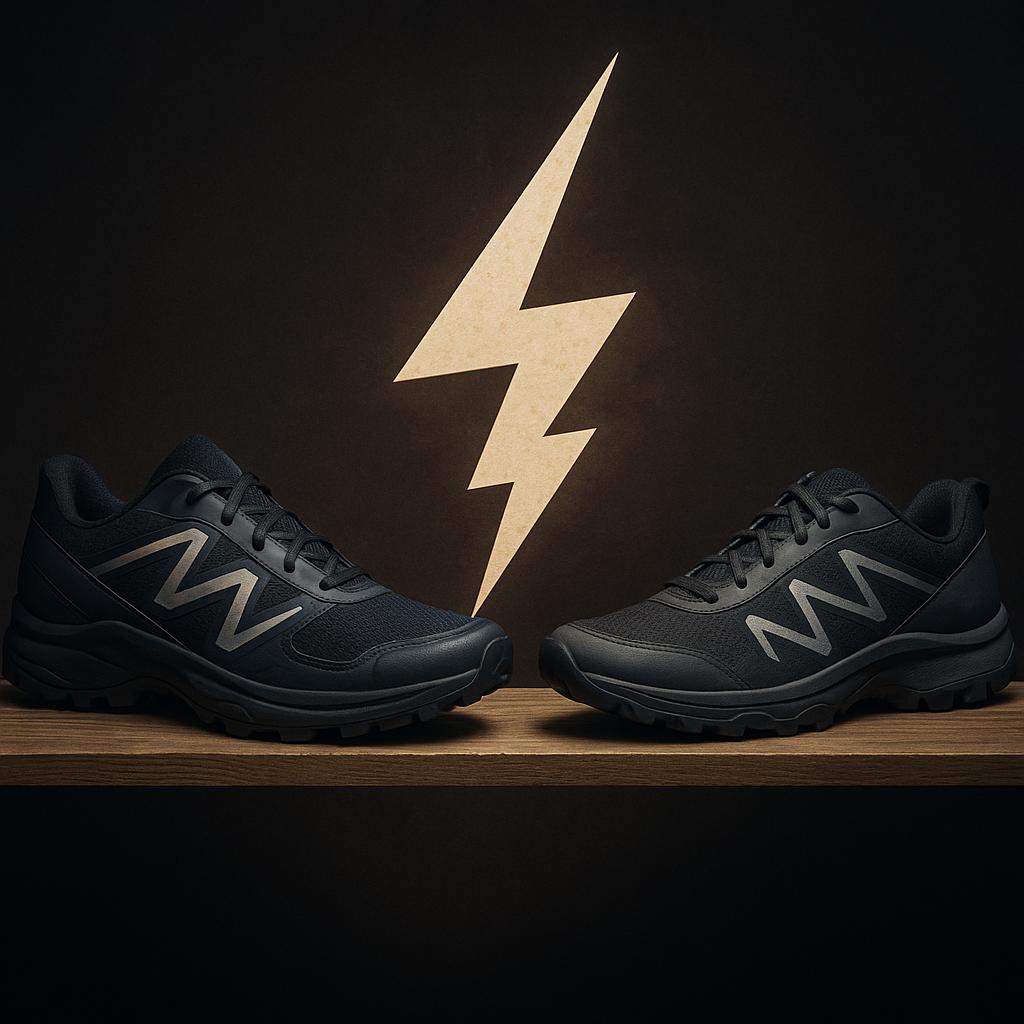
For the average consumer, a shoe is simply a shoe. It has a sole, laces, and some color. However, for lawyers and marketing specialists, every element of the footwear can be a "silent salesperson." A trademark is not just a logo (like Nike's famous "swoosh" or Adidas' three stripes). It is any mark that allows the customer to distinguish a product of one company from a product of another. It can be a name, a color, or even a specific arrangement of seams or graphic elements on the side of the upper. Salomon, known for producing equipment for trail running, has n using a distinctive "zigzag" motif on the side of its shoes for years. This is not a random pattern. The company has registered this design as a European Union trademark, giving it exclusive rights to its use. And it is this exclusivity that was put to the test when the Road Star shoes, with a strikingly similar motif, appeared on the market.
The case went to court when Salomon noticed that Road Star had registered an industrial design for a shoe that featured a graphic element on the side that was very similar to their protected zigzag pattern. In intellectual property law, this is a classic situation, but it is always difficult to prove. Salomon had to demonstrate that the competitor's design was not simply "similar," but that it infringed on their prior trademark rights and could mislead customers. Salomon's lawyers filed a request for the invalidation of Road Star's design. They argued that the average customer, seeing a shoe with the distinctive zigzag pattern on the shelf, might think, "Oh, this must be a new Salomon model!" even if the shoe was produced by a completely different company. This phenomenon is known in law as "the risk of confusion." If consumers can be mistaken about the origin of a product, the law should intervene.
The European Union Intellectual Property Office (EUIPO) sided with Salomon’s arguments. In its decision, the officials highlighted several key points. First, both trademarks were compared. Salomon’s zigzag pattern and the motif used by Road Star were deemed visually similar. Both consisted of sharp, geometric lines that gave the shoes a dynamic, sporty look. Second, the goods were identical – in both cases, they were sports shoes. This is very important because the more similar the products are, the less similarity in the trademarks is needed to conclude that infringement has occurred. EUIPO determined that the decorative element on the Road Star shoe did not only serve an aesthetic function. Due to its similarity to Salomon’s trademark, it encroached on the area of brand identification. As a result, the Road Star design was invalidated. This decision shows that authorities are increasingly taking the protection of graphic elements seriously, even if they are not typical logos with a company name, but rather constitute its visual identity.
Salomon’s victory serves as a warning to all footwear and apparel designers. We often think that adding “some stripe” or “some wave” to the side of a shoe is a safe stylistic choice. However, in the jungle of registered trademarks, such an innocent move can lead to a costly legal dispute. For small businesses, the simple conclusion is that a freedom-to-operate search (i.e., checking whether our idea infringes on someone else’s rights) should not only concern the company name. The graphics should also be checked. If your “inspiration” too closely resembles a distinctive element of another brand – even if it’s just a “zigzag” – you risk your products disappearing from the market faster than they appeared. Salomon has proven that it will defend its zigzags as fiercely as it defends its name.
Fill out the form and we will get back to you within the next … with a preliminary quote.