



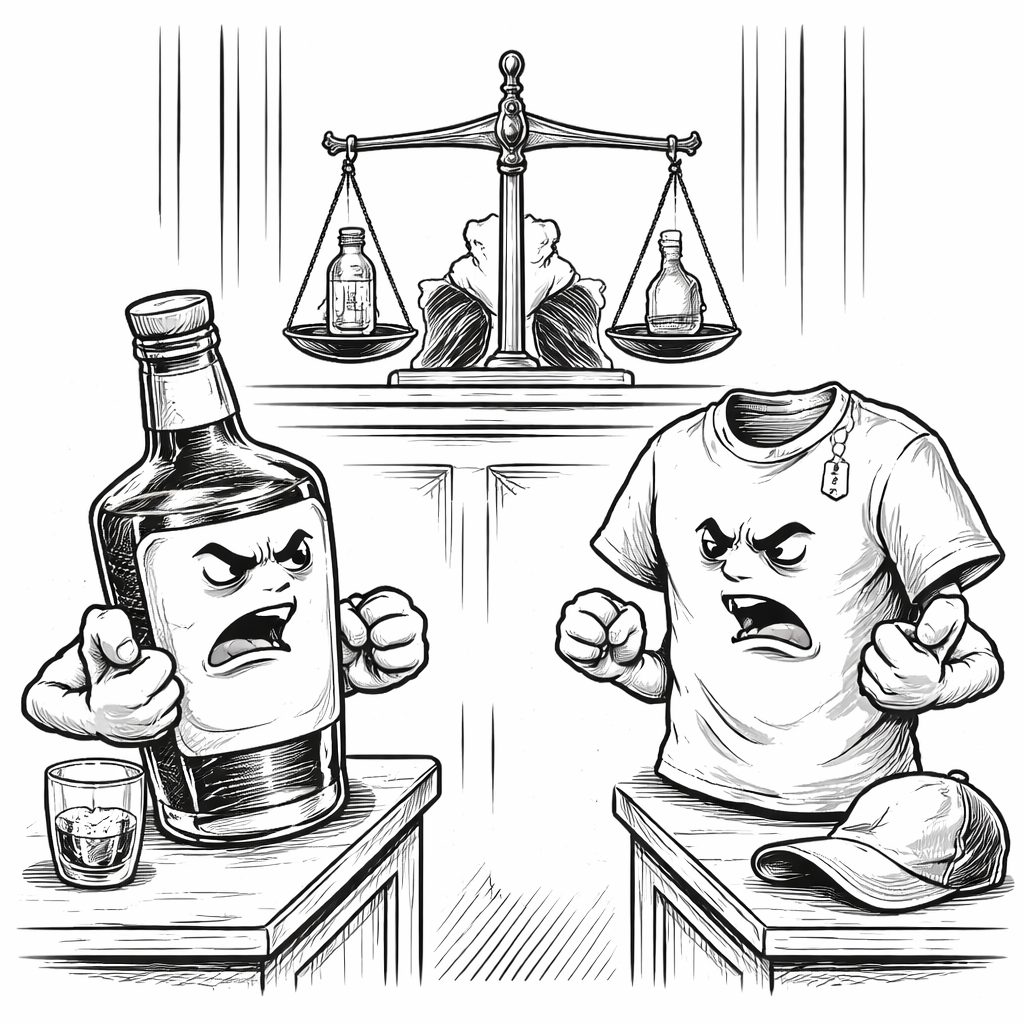
In the world of intellectual property, it is rare for an alcohol producer to dispute with an apparel company, but the case of Sazerac, the producer of a legendary rye whiskey, shows that industry boundaries are fluid. The company filed an opposition against a trademark registration by Stitches. The key issue was the so-called “likelihood of confusion,” i.e., the probability of misleading consumers as to the origin of the goods. Sazerac argued that their trademark is so recognizable that any similar graphic mark suggests a false association between the two companies.
Initially, the case was brought before the Trademark Trial and Appeal Board (TTAB), which operates under the United States Patent and Trademark Office (USPTO). The board determined that whiskey and clothing were “too far apart” for the average consumer to be confused. However, Sazerac did not give up, arguing in its appeal that contemporary alcohol producers regularly release their own lines of clothing or bar accessories. The United States Court of Appeals for the Federal Circuit (CAFC) therefore had to assess whether a consumer, seeing the Stitches logo, would actually think of a bottle of whiskey.
In U.S. jurisprudence, as well as in the practice applied by the European Union Intellectual Property Office (EUIPO), the “strength” of the trademark is key. The more well-known a brand is, the broader the protective umbrella that courts extend over it. In this case, the judges analyzed the so-called DuPont factors – a set of 13 rules used to assess the risk of confusion. They examined, among other things:
– The visual similarity of the two trademarks;
– The distribution channels (whether the products reach the same stores);
– The way in which customers make purchasing decisions in bars and stores.
The outcome of the case turned out to be favorable for the alcohol producer. The United States Court of Appeals for the Federal Circuit (CAFC) overturned the agency’s decision, finding that the previous assessment by the Trademark Trial and Appeal Board (TTAB) was incorrect. The judges emphasized that the Sazerac brand is strong enough that consumers are entitled to assume that clothing with a similar logo is an official product of the whiskey manufacturer. Consequently, the registration of the Stitches trademark was blocked.
This ruling sends a clear message to businesses: the fight for a brand is not just about the name, but also about the associations it evokes in customers’ minds. If you are planning to register a trademark, it is worth conducting a professional clearance search beforehand to avoid conflicts with major players who fiercely protect their reputation. Investing in legal security from the outset is always cheaper than a lengthy process before bodies such as the United States Patent and Trademark Office (USPTO) or national courts.
Fill out the form and we will get back to you within the next … with a preliminary quote.