



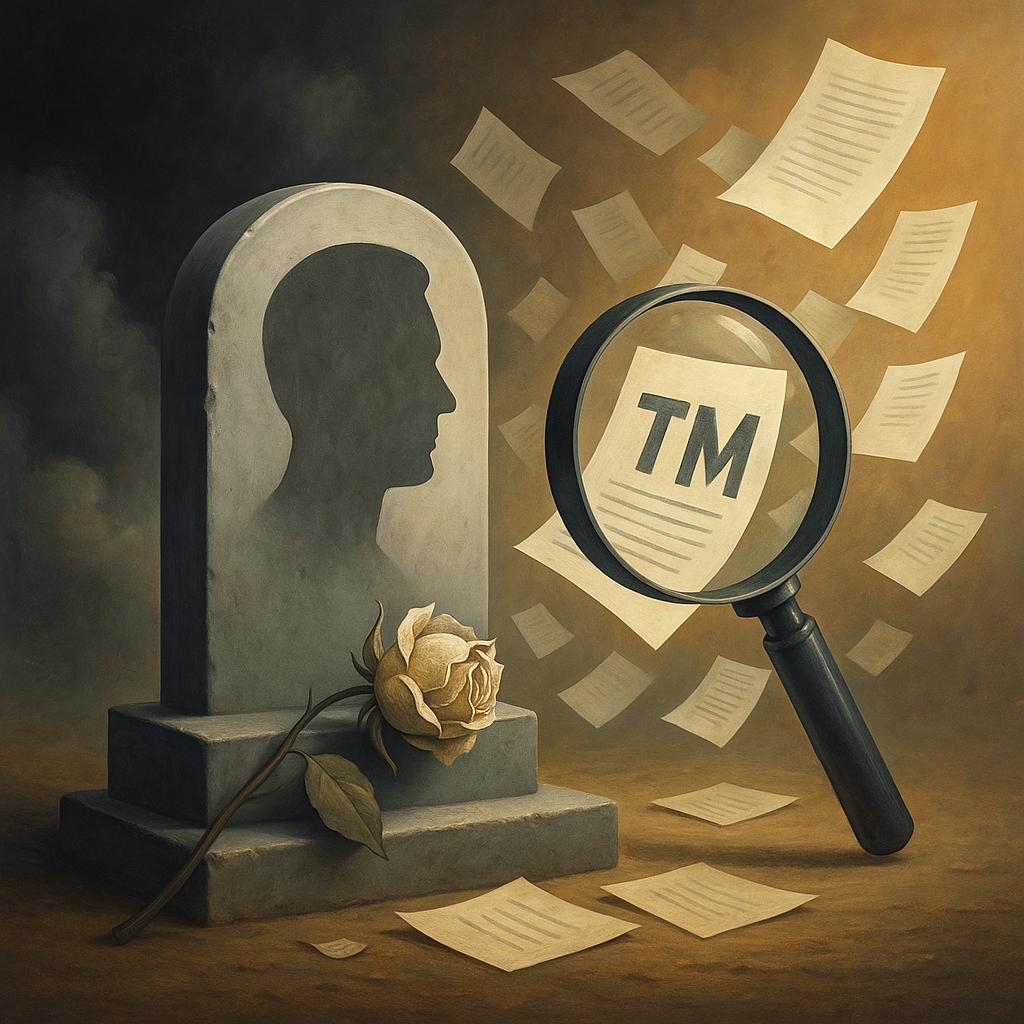
Within just a few days of Kirk’s assassination, applications began appearing at the USPTO for various terms and slogans related to him. One of the first was “Live Like Charlie,” filed the day after his death. This slogan quickly became a symbol of remembrance for the activist on social media, appearing in publications by the Heritage Foundation and in graffiti in his hometown of North Carolina, among other places. Shortly thereafter, the mark “For Charlie” was filed (September 13, 2025), followed two days later by two more: “Turning Point USA Constitutional Churches of America” and “Charlie Kirk’s Life Matters.” Many of these applications suggested an attempt to commercially exploit the popularity and recognition of the deceased. Some of the applications included categories such as clothing, accessories, promotional items, and even online services. In addition, an e-commerce site called “Live Like Charlie” was created, which may suggest a connection to one of the applications. Although the website was not yet fully functional, the fact that it existed reinforced suspicions about the commercial intentions of the applicants.
Trademark law in the United States provides special protection for the names and likenesses of individuals. While a person is alive, the USPTO typically refuses to register a trademark that includes their name or likeness unless they give explicit consent. For this reason, previous attempts to register trademarks containing, for example, the name Trump without Donald Trump's consent were rejected. In the case of deceased individuals, the situation is more complex. The Office may refuse registration if it believes that the applied-for trademark falsely suggests an association with the person or their legacy. In addition, many states in the U.S. have so-called "right of publicity" laws, which protect the name and likeness of an individual even after their death. In practice, this means that the family or estate of Charlie Kirk could object to any of these applications. Such proceedings could lead to the rejection of the registration even before it is legally granted.
Quick attempts to register trademarks after the death of a famous person are nothing new. In the past, similar cases have occurred after the deaths of celebrities, musicians, or athletes – from Michael Jackson to Kobe Bryant. The motivations of the applicants vary. Some claim to want to "honor the memory" of the deceased, but often the goal is the potential financial benefits that come with owning the rights to a popular slogan. A registered trademark can become a tool for selling clothing, gadgets, or digital products, and even for obtaining compensation from others who use similar markings. In the context of Charlie Kirk, applications such as "Charlie Kirk's Life Matters" raise particular controversy – especially in light of the socio-political divisions with which he was associated. Many people have seen them as an attempt to exploit the tragedy for business or ideological purposes.
Each application will now be reviewed by the United States Patent and Trademark Office, where a trademark examiner will assess, among other things, the likelihood of confusion and the potential for false association with the deceased. The current waiting time for an initial review is approximately seven months, meaning that decisions on these cases will not be made until mid-2026. If the office determines that a particular application suggests a false association with Charlie Kirk or his organization, Turning Point USA, the application will be rejected. Even applications that refer only to his first name – such as “Live Like Charlie” – may be deemed misleading, as the social context clearly indicates a connection to the deceased activist. Regardless of the outcome of the proceedings, this case demonstrates how quickly contemporary market mechanisms respond to media events – and how thin the line is between commemoration and an attempt to profit.
Fill out the form and we will get back to you within the next … with a preliminary quote.